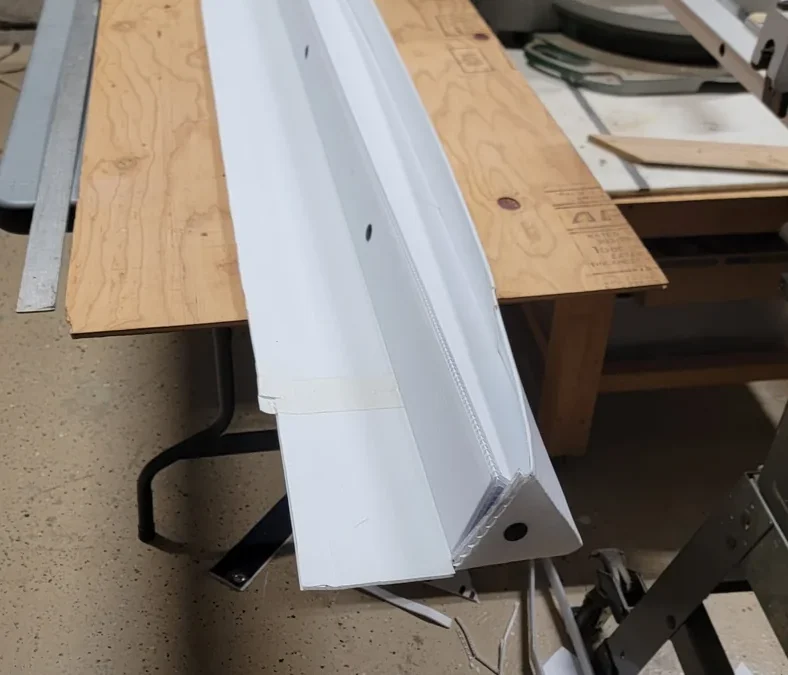
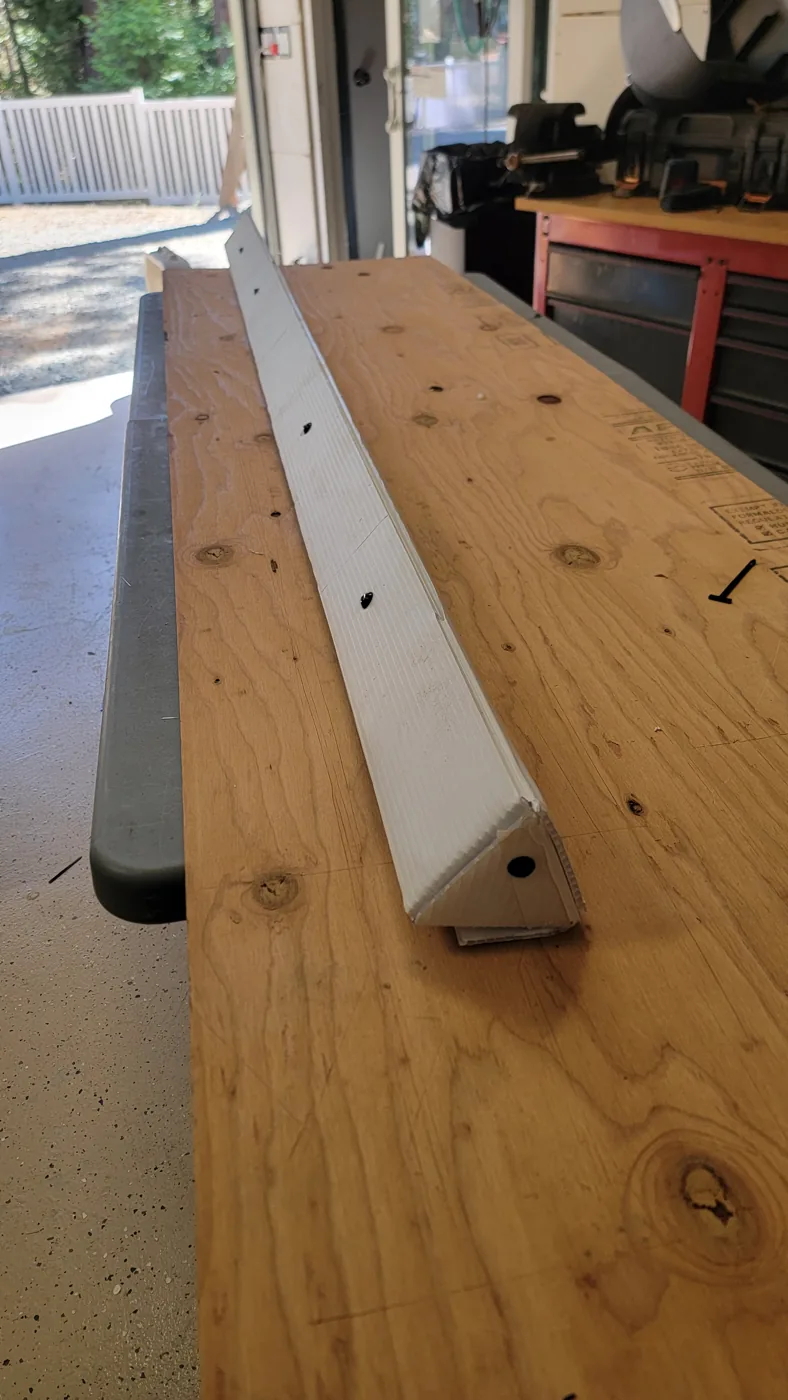
TriAngler’s triangular shape connects several parts of the design: compact packaging before use, nested layers around the rod, and an opening that runs along the package’s length.
The goal was to make a shipping package that could reach the sender as a compact kit, then become a full-length protective shell for a one-piece fishing rod.
A Shape That Starts Flat
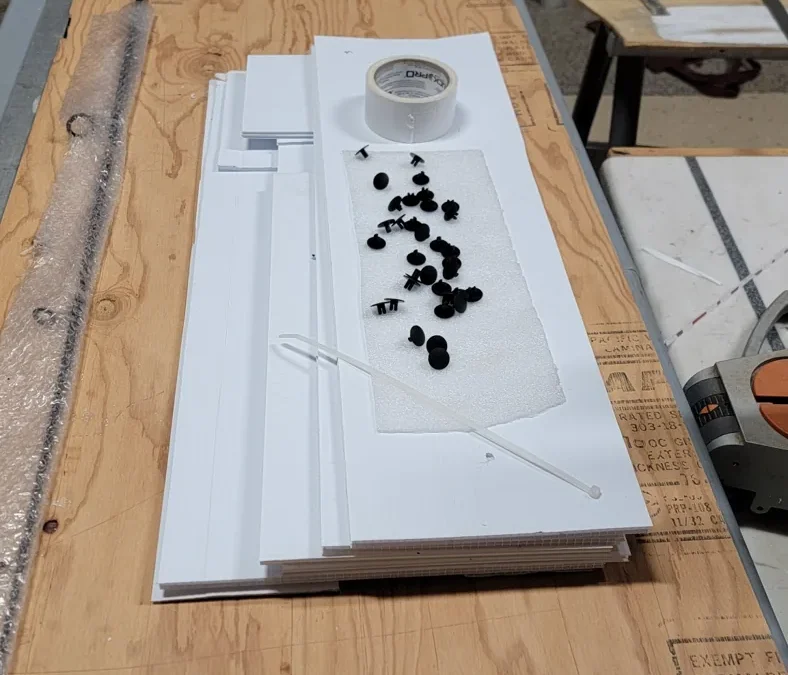
The assembled triangle starts as folded corrugated plastic panels. Before assembly, those panels can fold back on themselves into a compact stack, with the hardware alongside them.
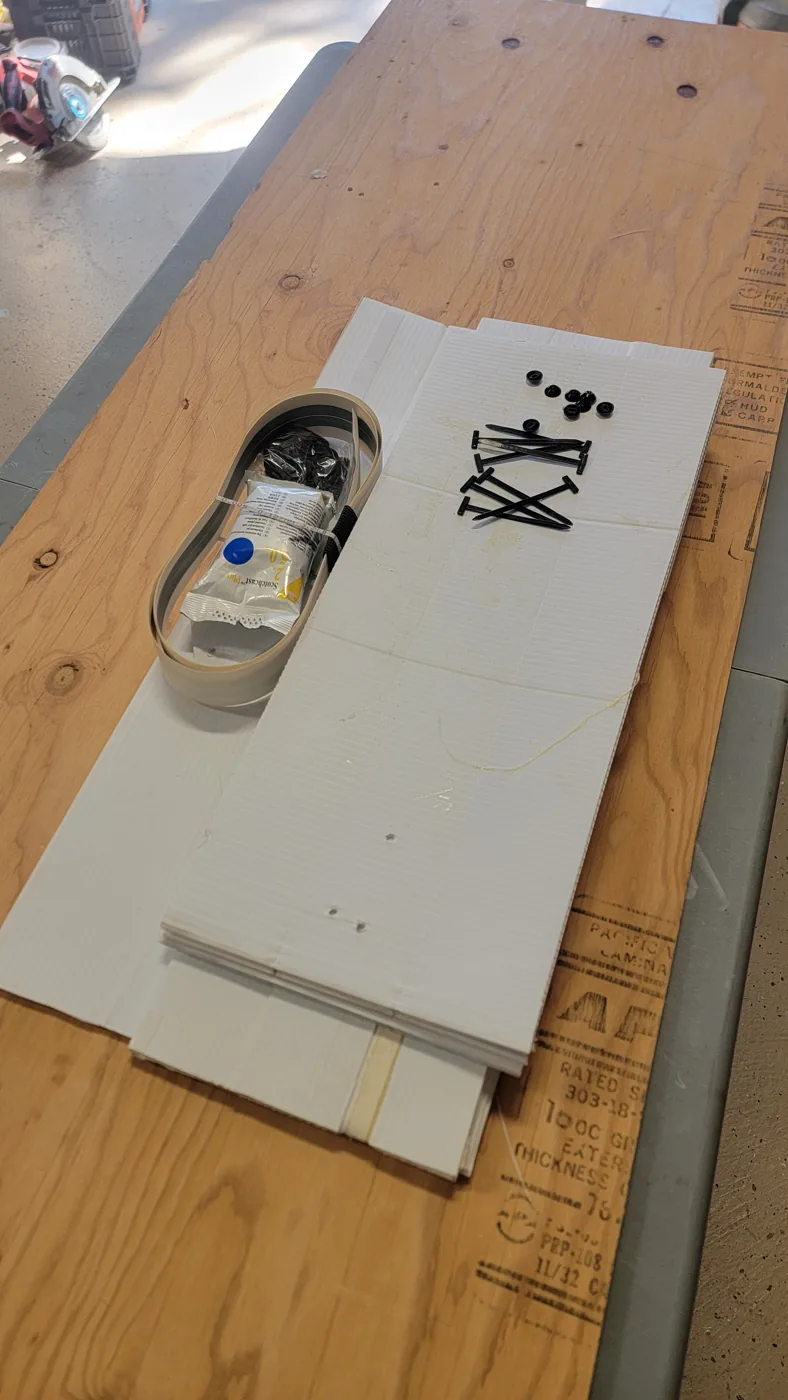
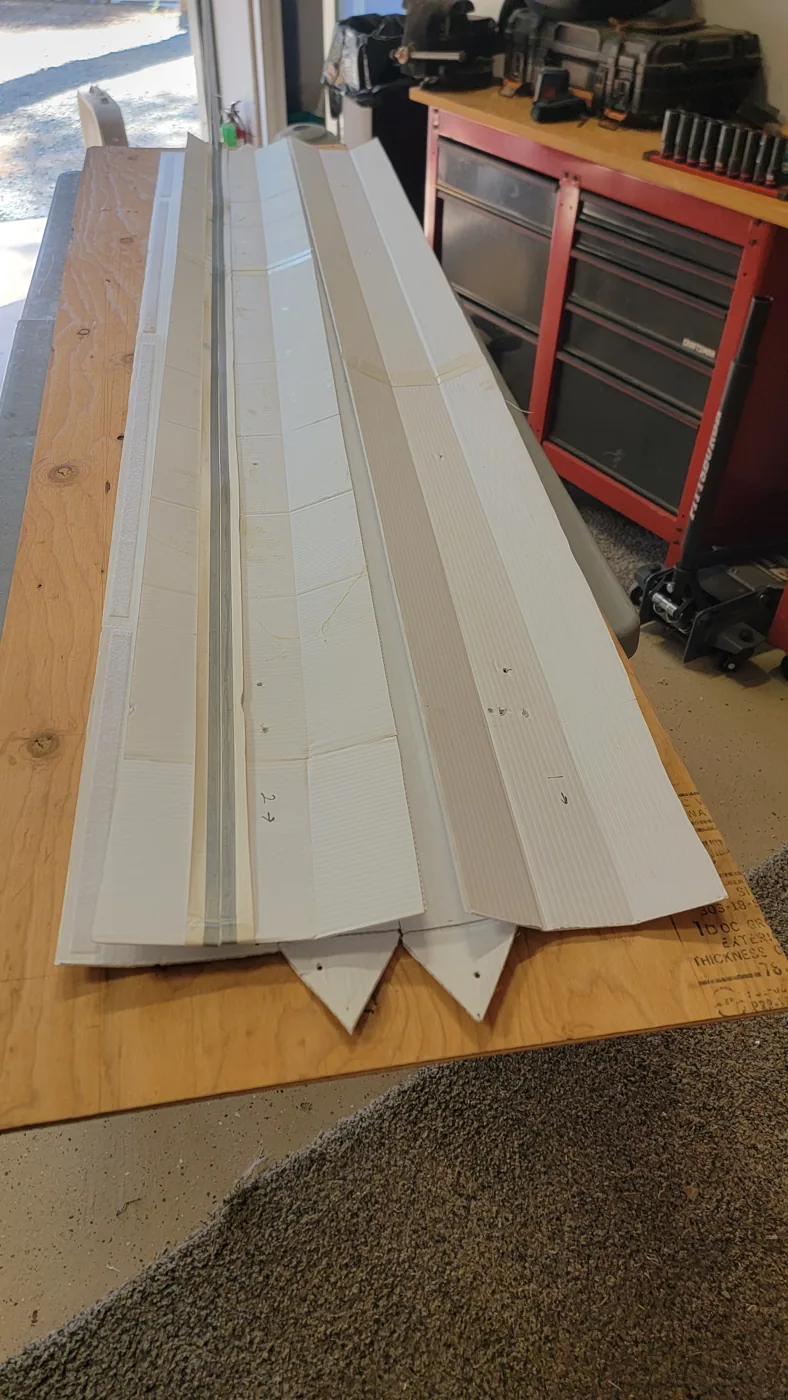
The accordion folds let the panels extend to their working length. The package can then be formed around the rod. That gives the design two useful forms: compact for getting the empty packaging to the sender, and full-length for shipping the rod.
Three Sides, Multiple Layers
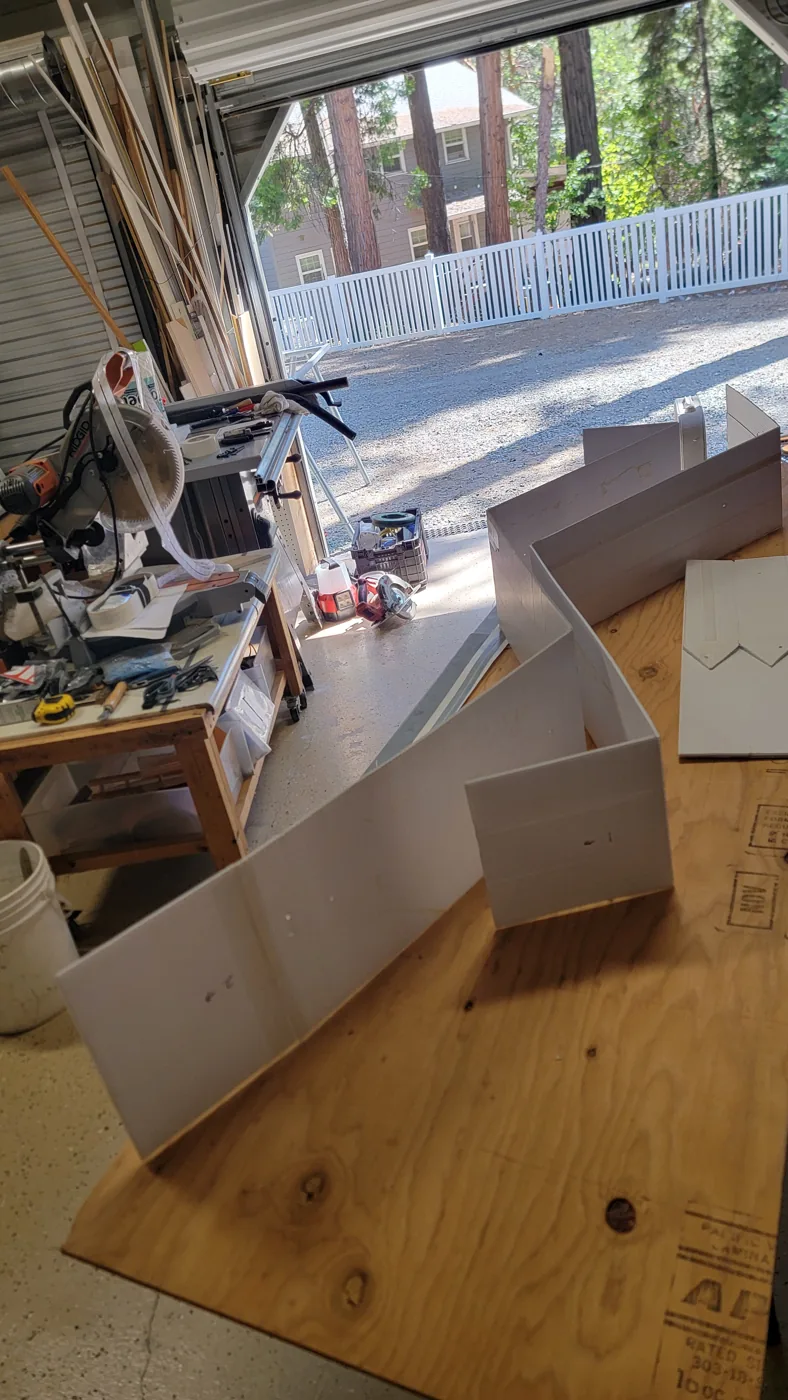
The triangular profile repeats through the nested layers. Each layer folds around the space occupied by the rod, with the next layer surrounding it.
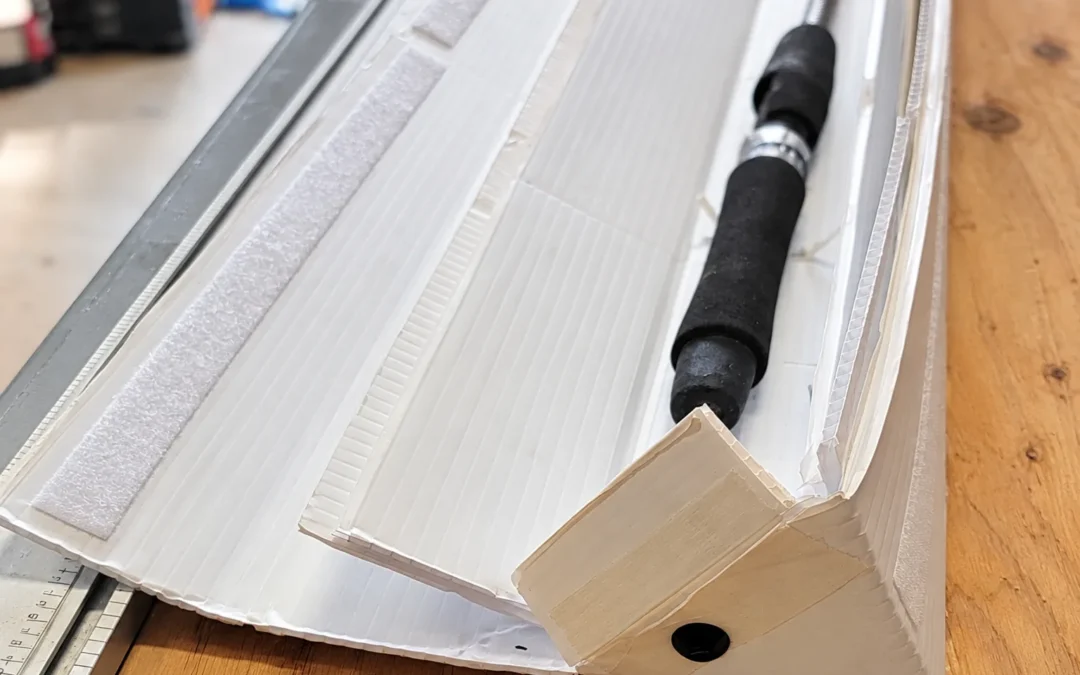
With the package open, the individual panels, fold lines, and end flaps are visible. Closing them turns those flat sections into the three-sided shell. The protection comes from the complete assembly: the material, nested layers, closures, and internal restraint working together.
Open Along the Length
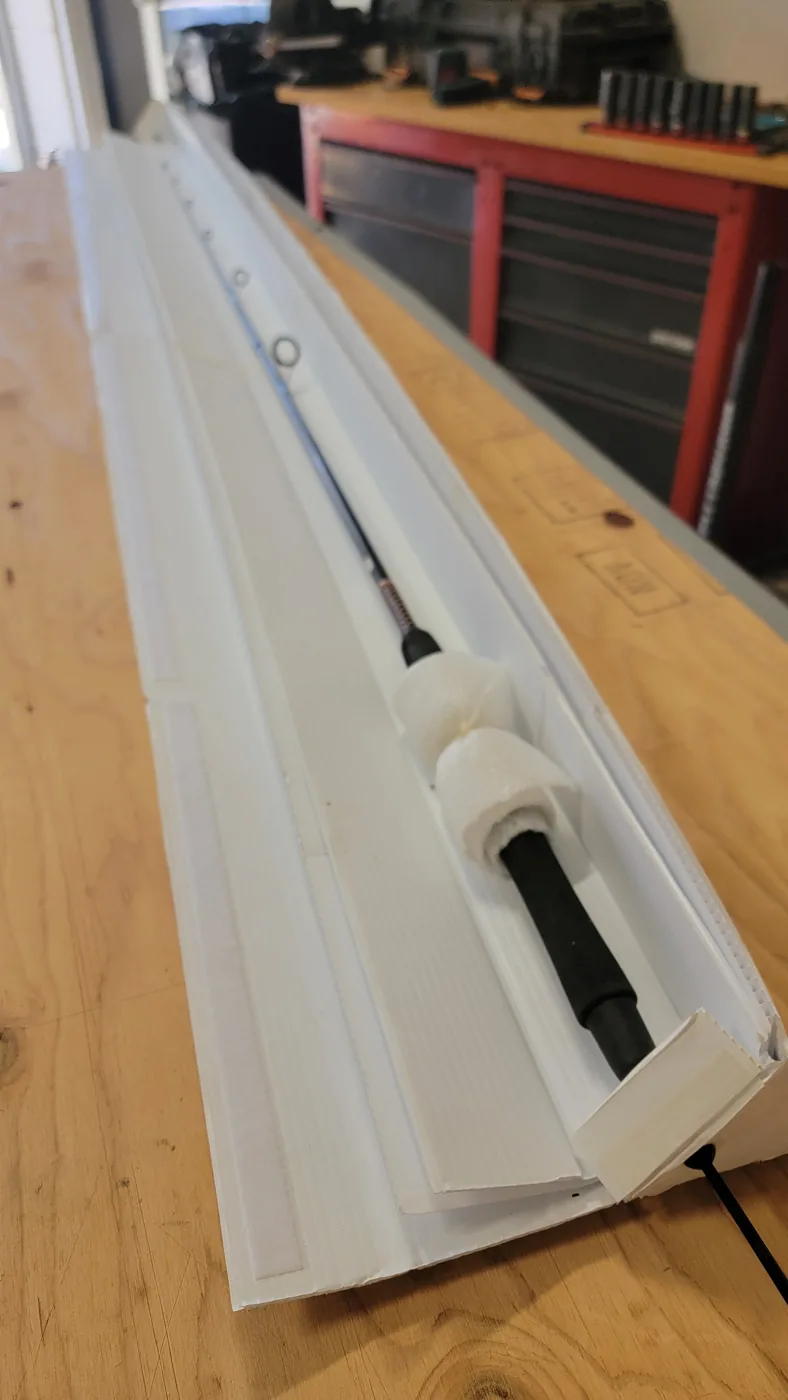
TriAngler opens along its side so the rod can be laid into the package. That lets the person packing it see the handle, guides, and tip before closing the layers.
The prototype below shows the rod positioned inside, with padding around the handle area. This access makes it possible to check placement and secure the rod before closing the package.
The Shape Is a Starting Point
The triangle gives TriAngler its recognizable profile, but the practical details determine how the package works. The panels need to unfold, the layers need to fit, and the closures need to bring the assembly together around the rod.
These prototype photos show that progression—from a compact stack of panels to an assembled triangular shipper. Each stage serves the same purpose: making a long fishing rod more practical to pack and ship.
Next: Compact to Deliver. Full-Length to Ship.